
One of my friends made a small comment about how crucial geometry was to the development of math and science. It was that small comment that inspired this article. Furthermore, since everyone, including me, loves time dilation and special relativity, I thought this would be a great topic. Another reason I wrote this is that most people don’t realize how (relatively)1 easy it is (compared to general relativity) to derive the equation that describes time dilation between two observers. Our humble goal for today is to discover for ourselves what Einstein discovered back in 1905.
Thought Experiment
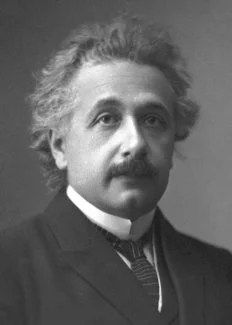
Einstein was a master at coming up with thought experiments to motivate his theories. In this spirit, we are going to set up our own thought experiment! But before we do, let’s talk about our endgame.
You may have heard that someone moving with respect to you will have their time run more slowly than your time. Indeed, this is true, and it’s just one of the things that Einstein taught us. We want to go one step further, though; we want to try to quantify the phrase `time runs more slowly‘. To do so, we will have a brave astronaut, Mae, and a scientist, Albert, conducting our experiment. Mae will be in a rocket in space, and Albert will be on the ground.
From our, and Albert’s, perspectives, Mae will be in the moving reference frame of a rocket, and Albert will be stationary on the ground, observing Mae as she zooms overhead. Our task is to devise a way to measure how much time passes for Mae on the ship and for Albert on the ground. Once we do, we will compare the times they record and be led to the famous time-dilation equation of special relativity.
Enough stalling on my part, let’s get into it!
Astronaut Mae’s Time Keeping Problem
Imagine, if you will, an astronaut named Mae in a rocket ship traveling at a constant speed of above Earth. Mae wants to set up a way to measure her time so that Albert can compare his time to hers.
Let’s help Mae brainstorm with some ideas.
Idea 1: Don’t overthink, just use a stopwatch. My first guess would be to just use a very precise stopwatch to measure how much time elapses. There’s one small (big) issue with this. How would we compare this measurement to one that Albert is making on the sidelines? We know that one stopwatch should run slower than the other, but there is no obvious way to quantify how much they will disagree if we only use a standard stopwatch/clock on the ship.
Idea 2: Don’t have a clock on the ship. Well, since any standard time-measuring device Mae uses will start running slowly due to time dilation, maybe we should put a clock outside the ship on the ground with Albert. Then Mae can watch the clock on the ground. However, this runs into the same issue as the previous idea: there is no obvious way to determine how much their relative time changes, since Mae has nothing standard to compare her time to!
Maybe that’s it! We need something that doesn’t change for Mae and Albert so that way we can make a meaningful comparison. What is something that is constant for everyone?
Idea 3: Use something that does not change for both Mae and Albert as a clock. Since the issues with ideas 1 and 2 come from the fact that there is no easy way to compare their standard clocks (they both have their own internal gears/mechanisms) we decide to make a clock using something universal: light. Einstein taught us in his theory of special relativity that the speed of light is constant for every observer. This makes light the perfect tool for measuring elapsed time for both Mae and Albert.
With the idea of using light and in a feat of ingenuity, Mae makes herself a light-clock. She uses a laser and two reflective surfaces. First, Mae sets the surfaces at a vertical distance ℎ meters apart. Then she sets them up so that a pulse of light bounces between them, i.e., so that one laser pulse reflects back and forth between the two surfaces. See the figure below.

Mae quantifies how much time passes by counting how many times the light hits the bottom surface. In other words, she uses the time it takes for light to make one full round trip as her measurement standard. Since she knows both the speed of light, denoted
Let’s do some of this math(s) that Mae did.
The distance between the two reflective surfaces is equal to

Mae then used that in order to calculate that the time elapsed for one of these oscillations is,
Where we have denoting how much time Mae would measure.
We will soon find it is useful to rewrite the above relationship in the following way,
Just like that, we’re momentarily done with Mae’s perspective; she’s already done enough work making that light clock! Let’s continue by changing our perspective to Albert’s, who’s watching Mae in her rocket.
Albert’s Perspective on the Ground
We now join our second scientist, Albert, on the ground. He’s watching Mae as she flies overhead at a constant speed

Albert is curious how well Mae’s light clock will work as a way for him to measure how much time elapses. He then wants to compare it to what Mae measures too. Just like Mae, Albert is one smart cookie and notices that the light beam must trace out a triangular path as the ship moves forward, oscillating between the surfaces in the ship. We draw this path using the yellow arrows below:

If we can find out how far the light travels, we can use the speed of light to determine how much time elapsed. So, Albert sets out to determine how long the yellow sides are. Mae told him that the height of the light-clock is

Albert does not like obtuse triangles, so he cuts the triangle in half to make it a right triangle, which he loves.

Albert knows a little physics and brings that in to help. First, Albert knows that Mae is traveling at a speed of
He also knows that it will be more convenient to have this relationship in terms of
WARNING: PRACTICAL USE OF THE PYTHAGOREAN THEOREM ALERT!
Albert then uses the Pythagorean theorem to deduce that the distance the light travels is,
Let’s get rid of the fractions (YUCK!)2 and multiply through by
Recall that Albert also knows that the speed of light is always so he says that since the light travels a distance in an amount of time Using this in the above equation we get,
Bringing it All Together
It might surprise you that we are almost done! We don’t need Mae’s or Albert’s help anymore; all we need to do is combine Mae’s time measurement and Albert’s time measurements (our boxed results).
Let’s use the equation Albert just found and plug it into what Mae found. As a reminder she found, Thus,
Let’s divide both sides by and then carry out some algebra,
All we have to do is solve for Albert’s time to get
This is the famous time dilation equation! Before we bask in its greatness, let’s change some of the letters to make it look more standard.
We’ll denote the amount of time elapsed by Albert by where the triangle is the Greek letter delta and when placed before the means change, so tonehat means change in time.
We will also denote the change in Mae’s time similarly by The Greek letter called tau, means proper time. Proper time is the fancy-sounding term we give to the time measured in one’s own resting (stationary) frame. And since Mae is not moving with respect to her light-clock, she would be measuring her proper time.
With these changes we get,
Much nicer looking huh? 3
What do we Learn from this Equation???
This equation is all well and good, but what can we learn from it? A great first pass at understanding the time-dilation equation can be found by plugging in a value for Mae’s time and some different values for Mae’s speed To keep things simple, let’s say that Mae measured only 1 second so that her proper time is second. Let’s now see how the time Albert would measure changes as Mae speeds up!
Mae’s speed | Albert’s Measured time | Mae’s Time |
|---|---|---|
| 100 miles per hour (= 44.704 meters per second) | 1 . 000 000 000 000 011 1 seconds | 1 second |
| Mach 1 (the speed of sound) (=342.9999338 meters per second) | 1 . 000 000 000 000 655 seconds | 1 second |
| The Speed of the ISS 7,660.477 meters per second | 1. 000 000 000 326 seconds | 1 second |
| Parker Solar Probe (the fastest human made object) 192,227.2 meters per second | 1. 000 000 206 seconds | 1 second |
| 1,000,000 miles per hour | 1. 000 001 11 seconds | 1 second |
| 580,771,037.26736 miles per hour | 2. 000 seconds | 1 second |


Take a look at how fast Mae would need to go in order for Albert to experience 2 seconds for every 1 second of Mae’s! Even the astronauts on the ISS will only have their time dilated by percent. *This is one of the reasons why no one noticed this phenomenon until Einstein! It’s also incredible that Einstein discovered it in the first place!*
Observe that the faster Mae moves, with respect to Albert, the more her time slows down compared to Albert. If Mae were moving at about 580,771,037 miles per hour for one year, then Albert would have lived two years, whereas Mae would only age one year. Mae is ageing and thinking more slowly than Albert!
Let’s go one step better and graph this equation. Again, we will set Mae’s measured time to second. We set Mae’s speed on the x-axis in meters per second. The y-axis will be the time that Albert measures.

By looking at the graph, we have now added a layer to our knowledge; there is a sharp increase when Mae gets close to the speed of light. Take a look at the time-dilation equation again,
When Mae’s speed, gets closer to the fraction in the denominator gets closer to 1. If Mae could travel at the speed of light, then and But then we’d divide by zero, which I’m sure you remember is frowned upon. This tells us something deep.
Nothing can travel faster than the speed of light, for some reason.
Wow how amazing!
One quick philosophical point regarding this speed limit, some people have said, “since photons travel at the speed of light, they don’t experience time.” Although the first statement is correct, the second statement is misleading, in my opinion. This is my opinion because this is a nonscientific matter; we should be careful not to anthropomorphize light. But, if you want to think of light as not having an internal clock, then go for it! It is mind-blowing!
Now, all this effort we have put in means nothing if we cannot experimentally verify what we have found.
Experimental Evidence
“The principle of science, the definition, almost, is the following: The test of all knowledge is experiment. Experiment is the sole judge of scientific truth.”
– Richard Feynman
There is far too much evidence to go over in one article, and this article is long enough as it is. But we wouldn’t be doing science if we did not even mention any of the ways that time-dilation has been experimentally verified. We will not include all the details, so I will include a few links at the end for you to check out if you are interested.
Cosmic rays, high-energy particles coming from space, when passing through the Earth’s atmosphere, will produce muons. These muons are subatomic particles that begin to head towards Earth’s surface after being produced in the atmosphere. An important fact about muons is that they have a very short half-life (if you haven’t heard of half-life, think of it as a measure of how long the muon lives before it decays). Muon’s half-life is so short that they should decay before they reach us on the surface of the Earth. In other words, we expect to see no muons. In fact, we might have naïvely said that in order to reach us, they would have to travel faster than the speed of light!
Here’s the amazing part, when we `look’ for them, we find them! They somehow reach us even though they shouldn’t. The reason they can get us before they decay is because they are traveling so fast their time dilates, and they feel less time than you’d expect (before Einstein). Moral: The muon’s proper time slows down so much that its short half-life, from our perspective, is long enough to make it to Earth’s surface.
How awesome is that?!
Somehow Einstein’s relativity knows about radioactive decay, which is a nuclear process. It’s absolutely incredible how far-reaching physical theories can be!
Concluding Remarks
I hope you enjoyed a little Einsteinian relativity today! I’m going to leave, as a challenge, the derivation of length contraction. Just as time dilated for Mae, her length would contract in the direction of motion. The idea is the exact same: come up with a way to measure lengths using light, and then compare what Mae and Albert would deduce. I hope you have fun with the challenge!
Let me know how it goes in the comments! Until next (proper) time!
Sources for muon decay:
- https://www.nature.com/articles/268301a0
- https://en.wikipedia.org/wiki/Experimental_testing_of_time_dilation
- https://ocw.mit.edu/courses/8-13-14-experimental-physics-i-ii-junior-lab-fall-2016-spring-2017/dba397e119acfe92807caeb1509c401e_MIT8_13-14F16-S17exp14.pdf
- https://youtu.be/f08-SYyjMp0?si=30x_jGfJGtg1_ERM
Footnotes:

Leave a Reply